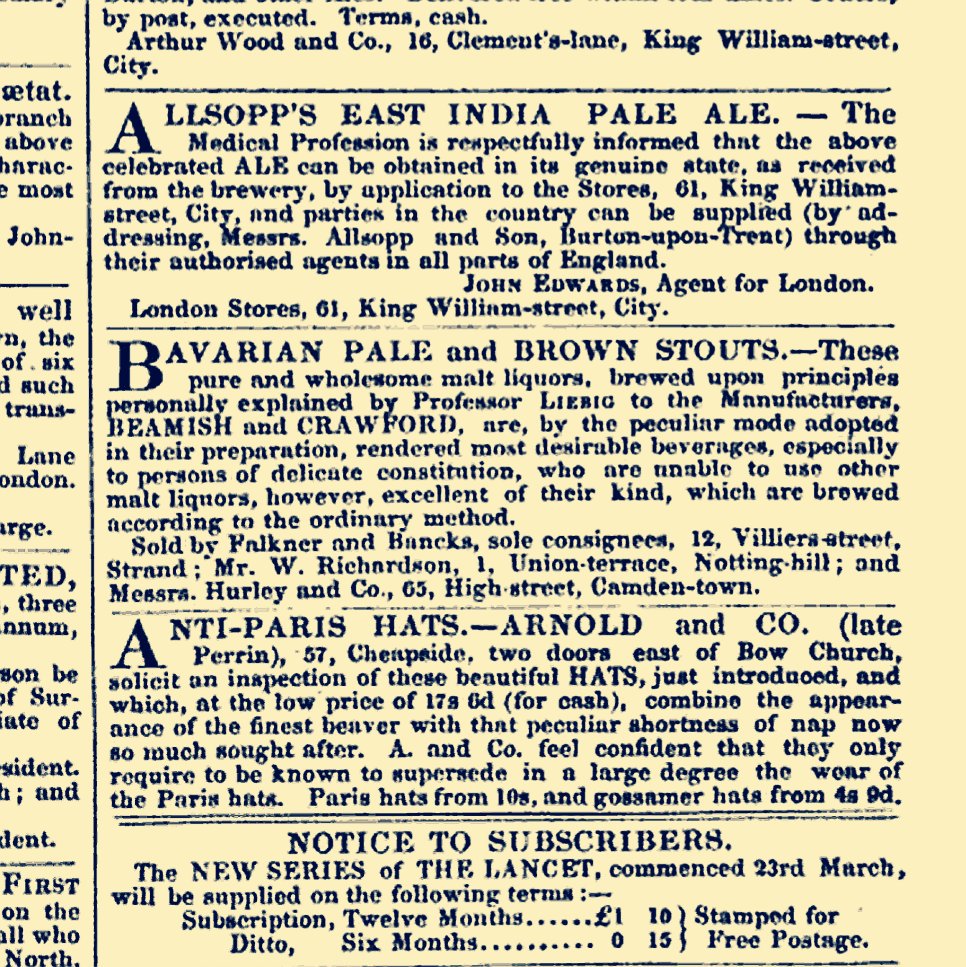
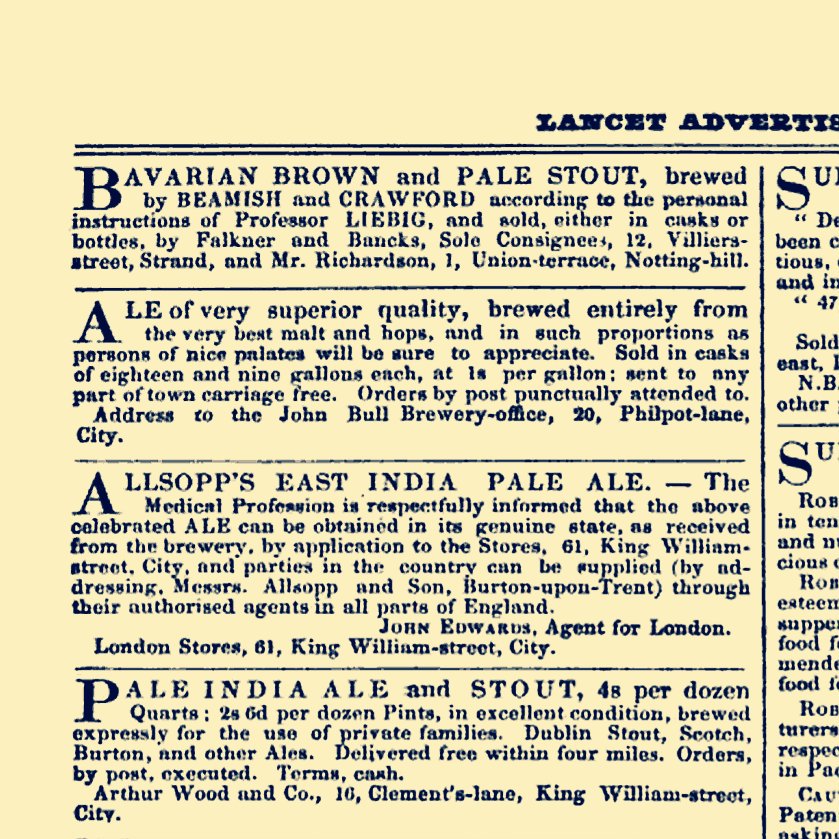
Late on Sunday night, another fearful collision took place in the Channel a few miles to the westward of the South Foreland, which, it is feared, has proved fatal to both ships. The ill-fated vessels are reported to have been the Khersonese, a very large ship, bound to Calcutta from London, and the Mindora, barque, Captain Hall, also from London, bound to Victoria (Vancouver's Island), with passengers and a valuable general cargo. The telegrams which have been received announcing the catastrophe are rather brief in the particulars. It appears that the collision took place off Folkestone, or rather near the Varne, the ships coming together with fearful violence. The Mindora is stated to have been abandoned in a sinking state seven or eight miles south-west by west of the South Foreland, having then six feet of water in her hold, and that the crew and passengers had landed at Kingsdown, near Walmer. […] Both ships and cargoes are insured for a very heavy amount.The Liverpool Mercury – Wednesday, 30th November 1864
Such was the sad fate of the Mindora (AKA Mindoro), a brand new barque – a versatile type of sailing ship – that was launched in Sunderland in August of that year, 1864. It was built in the Pallion shipyard of Mr. William Adamson, and was a 436 ton ship measuring 136 feet by 27 feet 8 inches and registered and owned by the Adamson family. By the end of that month, it was being readied to be loaded at London Docks, where prospective passengers or shippers were invited to apply to various agents in the city regarding passage to Victoria on Vancouver Island, Canada of people or product. It set sail on the 20th of November with Captain Hall in charge and a crew of 13, plus 3 male and 3 female passengers1, plus a fully loaded hold.
The ship was heading towards the English Channel on its westward turn when the collision reported above occurred on the night of 27th of November 1864 in poor weather, and although the Khersonese eventually limped back to London the Mindora was not so lucky. Eventually sinking with all its cargo but at least with no loss of life.
And what became of that cargo? Well a newspaper report in July of the following years2 tells us more:
DOVER, July 4. - The Mindoro (barq.), of London, Hall, from London to Victoria, V.I., which was abandoned in a sinking state 28th Nov., after collision with the Khersonese, from London to Calcutta, has been found sunk four miles off this place. The divers engaged report that she is nearly upright, and that the lower masts are standing, but dangerous to shipping, as there are only three fathoms upon her mast heads.
They position where it sunk must have been roughly noted or recorded at the time, and it seems to be in relatively shallow water, with just five and a half meters of ocean over her mast heads. We can also see that efforts were being made to dive on the boat, and yet another report3 in a newspaper's Maritime Extracts gives us the following news from Dover on the 28th of July:
The undermentioned goods were landed here to-day by the divers, being the first portion of the cargo of the Mindoro barque, which lies sunk about four miles off this port:—14 casks of Bass's pale ale; 4 dozen marked “M D O”, from Cameron and Saunders; 8 cases cognac (Jas. Hennessey's), marked “G N”, “E H”, “Twis”; 1 bale linen shirts; 1 basket female wearing apparel; 2 large cases marked “J W” in a diamond “V” outside; also, 2 water casks, and some breakers painted green.
So just a few months after its sinking, divers were already pulling up both drink and clothing from the wreck. The lettering mentioned are intriguing and are perhaps the initials of the end receiver of the goods in Victoria? (The MDO might be an abbreviation for the ship but the other letters would not make sense then?) Also of interest is the Cameron and Saunders mentioned with regard to casks recovered, and more on those names later.
Then in September of 1865, still less than a year after the ship sank, we get the first mention of the focus of this article – stout!4
At DOVER—For the benefit of all to whom it may concern.Important Salvage Sale.At the STORES in HAWKESBURY-STREET, DOVER,On TUESDAY, SEPTEMBER 5, 1865, at Eleven precisely,By Mr. T. G. BROWNING,A CHOICE COLLECTION OF CLOTHING,Consisting of cloth coats, moleskin trowsers, felt and straw hats; also, a quantity of Hoyles superior prints, bareges, muslin curtains, Lenos mohairs, silk parasols; a puncheon of rum, sundry cases brandy, ale, and stout; case of eau de cologne, and sundry other articles;—salved from the wreck of the ship Mindora, sunk off Dover on a voyage from London to Victoria, Vancouver's Island. Particulars will be given in catalogues to be obtained of the Auctioneer, High-street, Whitstable; or of Mr. W. J. IRON, Receiver of Wrecks, 1, Cross Wall, Dover. Samples of goods may be viewed on the day prior to the sale, from Ten to Four o'clock.
Yet another newspaper's Maritime Extract from Dover on September the 29th states that, ‘A quantity of goods [has been] recovered from the sunken ship Mindora, consisting of brandy, &c. The ship lies in deep water’. This report, though scant on the actual salvaged cargo, gives us the names of the ‘diving cutters’ that recovered the goods, Fear Not, Nancy and Mandamus. (One wonders if this is 3 ships or 2?!)5
A report in a different newspaper6 on the same date gives us an idea of what those good are, minus the brandy:
A Large quantity of WOOLLEN, COTTON, and other GOODS, consisting of about 4,000 pairs stockings and socks, 10,000 yards prints, 500 yards flannel, 4,000 yards unbleached cotton, 50 Macintosh coats, 500 merino shirts, 40 pieces barage, 400 pairs of merino and other drawers, 70 doz. cambric handkerchiefs, 500 yards cloth, 200 woollen shawls, and sundry articles of clothing, woollens, &c.
And there’s even more the following month, when, ‘A Large assortment of Ladies' superior LINEN and COTTON UNDERCLOTHING of the best manufacture, 100 doz. Men's Cotton Socks, 40 pieces sup. Alpaca, about 50 pairs Men's Shoes, and sundry articles’ are offered for sale from the wreck.7
And incredibly, the recovery of goods continues, with the following advertisement8 appearing in December 1865:
For the Benefit of All to Whom it may Concern. TO BE SOLD BY AUCTION, BY MR. T. G. BROWNING, ON TUESDAY, DECEMBER, 5TH, 1865, At Eleven o'clock precisely, AT the STORES in HAWKESBURY STREET, about 60 Cases of Brandy, Three Cases Wine, One Cask Brandy, 1 Puncheon Rum, and sundry other articles, salved from the wreck of the ship 'Mindora,' sunk off Dover on a voyage from London to Victoria, Van Couvers[sic] Island. Catalogues with particulars can be obtained of the Auctioneer, High-street, Whitstable; or of Mr. W. J. Iron, Shipping and Insurance Agent, 1, Cross-wall, Dover.
That appears to be quite a large quantity of bottles, 60 cases of brandy alone would amount to large consignment to be ‘rescued’ from the bottom of the sea and combined with the other goods recovered and those perhaps not reported it seems to have been a very worthwhile salvage venture.
We are not finished yet as in June the following year – 1866 – someone was yet again diving and landing goods in Dover, with 2 cases of cotton prints and 2 cases of ginger being brought up and reports that the now intended to ‘blow the decks out of the Mindora’ to get at even more cargo.9
And last but not least, the following month we get a report10 that on the 30th of June 1866 that more goods were hauled up:
The following goods were landed by the divers this afternoon:—2 casks bottled stout, 30 muslin curtains, 2 pieces damask, 10 pieces prints, 2 pieces alpaca, 6 stools, and a case of ginger, from the wreck of the Mindora.
Finally we have some more stout being raised and a better indication of how they were stored. So packed into casks not crates.
(There is another mention of stout being offered for sale from the ship but the stock is combined with that from another wreck so it can’t be verified to come from the Mindora.)
What is incredible is the sheer amount of salvage being lifted from the wreck, and that it survived the salt water. Whatever about the bottles and clothing, the ginger must have been well pickled!
It is worth noting to that shipwrecks were incredibly common in this era, as was the loss of goods to the sea, much of it unreclaimed unlike the cargo of the Mindora. There are, or were, probably tens of thousands of bottles of beer sitting on the floor of the oceans of the world, a fair few whose contents would have originated in Ireland, and especially from the Guinness brewery.
-o-
Now we can finally jump forward 161 years from the ships sinking and a story of a diver finding a Guinness bottle (which morphed into 20 in some reports) in the wreck of the Mindora in 2025, which has just recently been reported in dozens of online articles. According to the embossed base, the bottle contains Guinness Extra Stout from Cameron and Saunders, who we might remember were mentioned above in a newspaper report of salvaged stock, and this branding is repeated on the top of the capsule that covers the caged and corked top. As we can see from the older newspaper reports above, a huge amount of the cargo was salvaged from the wreck in the years after the ships sinking including some bottles of stout that we might assume were from Cameron and Saunders given the recent find and the name-check above with regard to casks recovered.
We now know that this is not the first bottle of stout to be salvaged from the wreck so it is possible that no more remain, despite the mention of others being suspected to be there by the diver Stefan Panis. Although it is certainly more than possible that one cask, or crate, was missed during the original salvage and more are somewhere within or without the wreck, waiting for the sands to shift to reveal themselves, or that they were buried deep in the hold and still sit there biding their time for discovery.
Depending on maritime law it is possible that others may not dive on the site in order to dig for what they see as buried treasure, as the site appears to be relatively well known in diving circles.
-o-

The label on this recently found bottle has long since disappeared but this playing card image11 produced by Cameron & Saunders shows a label for such a beer. This might be later than those shipped on the Mindora but it is possible that they are the same design or similar that would have been affixed to the bottles. Images of the bottles from current news reports and social media are typical of the heavy shoulder bottles used at this time, especially for export, although the embossing is a nice touch as is the capsule that covers the top of the bottle and matches somewhat the logo in the centre of the label facsimile shown here. The recently found bottle appears to be pint but is possibly a quart size, so 2 Imperial Pints? Although the pictures are unclear and Guinness's stouts was shipped in both sizes to Victoria according to advertisements from this time. What we can say is that Cameron & Saunders were shipping 'Burton Ale' in Quart bottles packed 4 dozen to a case to Victoria in 1862. This gives us a fair idea of how many bottles of stout were recovered initially, if the 4 dozen cases recovered contained this number of bottles! And, if that consignment from Cameron & Saunders was Guinness Extra Stout and not another beer such as Bass.
Cameron & Saunders operated from 7 Hart Street, Mark Lane in London at this time and were primarily Bass bottlers and exporters. The site, which is now a high-rise modern building, would have been conveniently located close to both Fenchurch Street train station and the Thames for easy shipping of goods by sea or rail. They appear to have commenced trading around 1859 or a little before and were bought out some time in the first decade of the 20th century by a rival company, although as a brand they seem to have lasted until the 1920s.11 They were one of many Guinness bottlers during this period when it was a common practice for companies such as these to purchase beers from Guinness, and other breweries on these islands, in bulk and bottle the stout with their own branding once the design and wording had been signed-off by Guinness in Dublin, and as long as it said it was Guinness's porter in the bottle. (This generally meant that theirs was the only porter they were allowed to bottle.) Of those bottling companies, Burkes was probably one of the more well known, along with Blood Wolfe, Hall, Read, and Moline amongst others depending on the era. Indeed Guinness were shipping huge amounts of their stout porters to England specifically for this purpose, as they themselves wouldn’t enter the world of bottling their own beers for a considerable few years more.
To give an idea of how valuable this export trade was to Guinness, in 1863 the London trade alone for Guinness was worth £64,000 of a total English trade of £213,000, that being over twice the trade of Dublin at £100,000 with the total Irish trade being ‘just’ £341,000.12 That’s just how important exporting their stouts was to Guinness in this era, and beyond of course.
This stout would have been brewed in Dublin before being matured for 2 years in huge vats and it would have then been transferred to wooden casks and shipped to London where it would have been left to settle for weeks before being bottled, corked, caged and encapsulated. Then it was labelled and packed most likely into barrels/casks, or perhaps crates, with dry straw before being loaded onto a vessel. So that recently salvaged stout is unlikely to date from 1864, and more likely to be from 1862 or before – it's even older than has been reported!11
-o-
As to the beer itself, a lot has been made in the recent news regarding the plans to harvest the yeast from the bottle in order to rebrew the beer. This would be impossible to do from just regenerating or even matching the yeast for a number of reasons, not least being that it probably contained not one yeast strain but several, including less conventional brewing yeasts such as Brettanomyces and Lactobacillus which may have entered the beer either in the Guinness brewery or the bottling warehouse of Cameron and Saunders. These may have given the beers a drier, funkier and more acidic – but still palatable – taste. They are still used in certain beers today for the same reasons, although it was likely their effect on the beer was less seen as a positive back in the day?!
In order to explain why the yeast is just a small, if important, factor in the beer's recipe we need to look at what exactly constituted Guinness Extra Stout in the 1860s, and luckily, we have a good and reliable second-hand source for that, given that access to the brewing archives of Guinness is strictly off limits to mere mortals. David Hughes in his book on bottled Guinness11 gives us more than an inkling of what the beer was like at this time, give or take a few years.
In 1860 and 1867 Guinness Extra Stout was brewed to 1.079 gravity, a measure of the sugar it contained that would be turned into alcohol by the fermentation process. It probably finished fermentation at around 1.018 or so (or perhaps lower by the time the bottler got it into actual bottles and it conditioned even more in there?) giving an alcohol by volume of around 8% or so, the same as Guinness's current offering of Special Export served on the continent, and not to be confused with the slightly lighter modern Foreign Extra. This level of alcohol would certainly help its stability on its journey around the world as would other factors too. The Foreign Extra Stout brewed in the same years was a little lighter curiously, at 1.076 but appears to have finished lower so may have been as strong or a little more perhaps? Cameron & Saunders also bottled this beer, and labels for it also survive.
The ingredients, although generally the same in certain ways, were quite different to today’s draught nitro Guinness. The barley variety would be different as would the malting process and types of finished grain. Roast unmalted barley is used in the modern Guinness portfolio but this would not have been used in brews at this time. A list from 1883 shows that the malts used were pale (which would have been darker than modern pale malt), amber, and roast. It was more likely higher hopped than today’s versions too, giving more hop bitterness, although perhaps a less roast barley bitter bite due to the use of roast malt versus roast barley, as books on the brewing of Irish porter from around this time state that the 'black' malt was more akin to chocolate malt, so not quite as well roasted.
The brewing process would be similar in one way but radically different in others, with longer mash times and boil times and changes in almost every step compared to modern processes. The equipment used is more modern too, which would effect the brewing. Even the fermentation process differs from today and the use of wooded fermentation, storage, and shipping vessels means the inclusion of ‘bugs’ other than the original brewer’s yeast as mentioned earlier.
All of this means that a beer from the 1830s would be impossible to brew again accurately and the idea that anything could be gleaned from just analysing the yeast is ludicrous. It could be done to a certain degree in collaboration with the Guinness archive who would have the actual record of the brew but it would still probably be a watered-down version, literally. Those who attempt to brew historical brews will always say that they will keep as close as possible to the recipe but with so many variables it would be impossible to say that they were brewing the same beer, in fact it would be accurate to say they definitely are not. And hobbyists can get a little closer than most professional brewing companies where time and materials equate to serious money, so the research, work and recreating of ingredients required would be unfeasible for most if not all.
Any brewery who says they are brewing a dead-on balls-accurate historical brew is more often than not fibbing to you.
This found bottle of beer is certainly hugely important as a historical brewing relic and as part of an intertwined story and the history outlined very briefly above, along with the tangible heritage of the Guinness brewery. But the respreading of this story is more down to the interest and marketing of modern Guinness than anything to do with that history. It’s clickbait for the Guinness obsessed and beer-curious, bandwagon jumping to sell advertising buy the reporters. Although it was of actual interest to those interested in the history of beer in fairness.
And perhaps that is reason enough to write this post. Not a rebuttal, not a rebottle either hopefully, just a recording and reiteration of an important part of Irish brewing history.
-o-
We will leave on a quote from David Hughes’ excellent bible of bottled Guinness.
‘The Guinness of today, be it Extra Stout or Foreign, is younger, lower in alcohol, less bitter, much less acidic, the gas content of the beer and head size is higher, there is no sediment in the bottle, it is brighter when held up to a lamp and crucially it is more consistent in its quality and in real terms cheaper to buy.’
Personally though? I’d love to try a bottle of Cameron & Saunders Extra Stout from a corked and caged bottle.
I might even share some …
Liam K