Tuesday, 23 October 2018

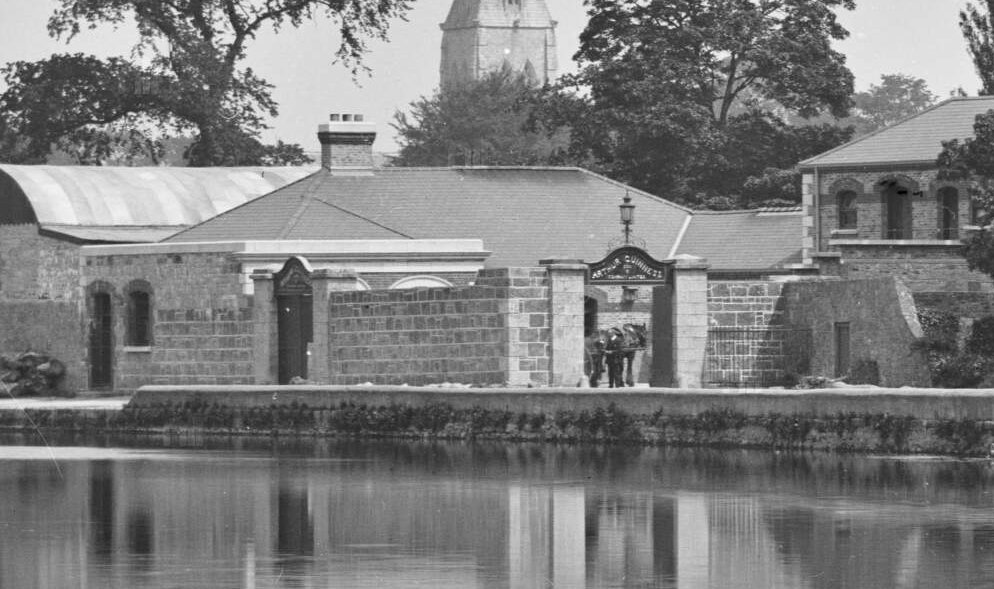
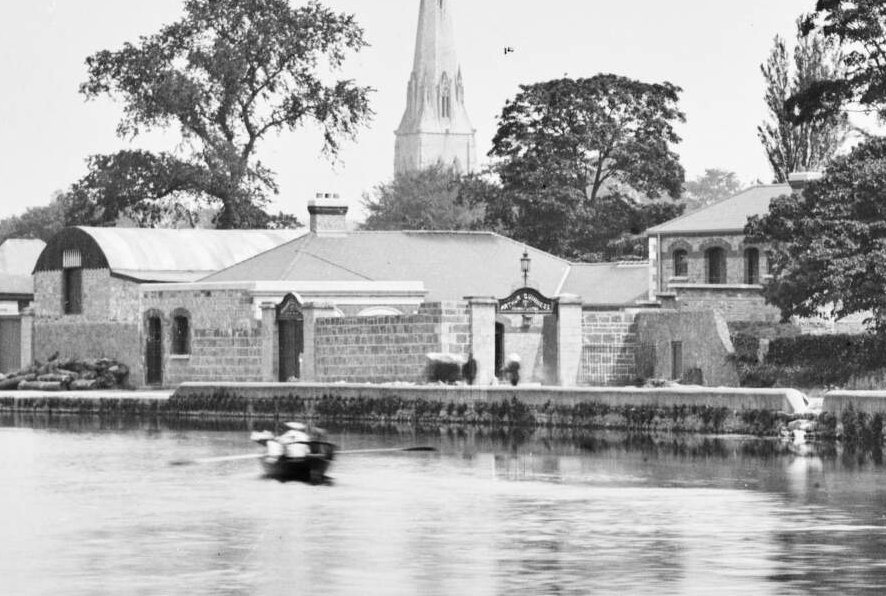
Beer History: Guinness Depot Carlow, c. 1900...

(Tweet-to-Blog-Conversion-Project)

Back in March 2017 I posted these tweets...


'Guinness depot on the Barrow in Carlow - late 1800s(?)
[via NLI Photo Collection - Cropped]'


'...Here's a better photo from the same source. If you look through the gate you can see the delivery system post-barge! More likely c. 1900.'


---

The original images are from The Lawrence Photograph Collection on the NLI website are here and here, and you can see St.Anne's church on the Athy road (before it was moved to Graigue to become St. Clare's), and a malthouse and the gasworks chimney in the background. I think this is the building (under the C) via GioHive on the OSI's historic 25inch map.

It would be great to get a name for the gentleman inside that archway!

Edit: Thanks to Charlie Roche (@charleymcguffin on Twitter) here's a photo of the same building from 1948 via the Britain from Above website. I've added the arrow to make it clearer.


Part of my Tweet-to-Blog-Conversion-Project to give a slightly more permanent and expanded home to some of my previous Tweets.

(My original thread is here)

With thanks to OSI, GeoHive and NLI websites

Tuesday, 2 October 2018

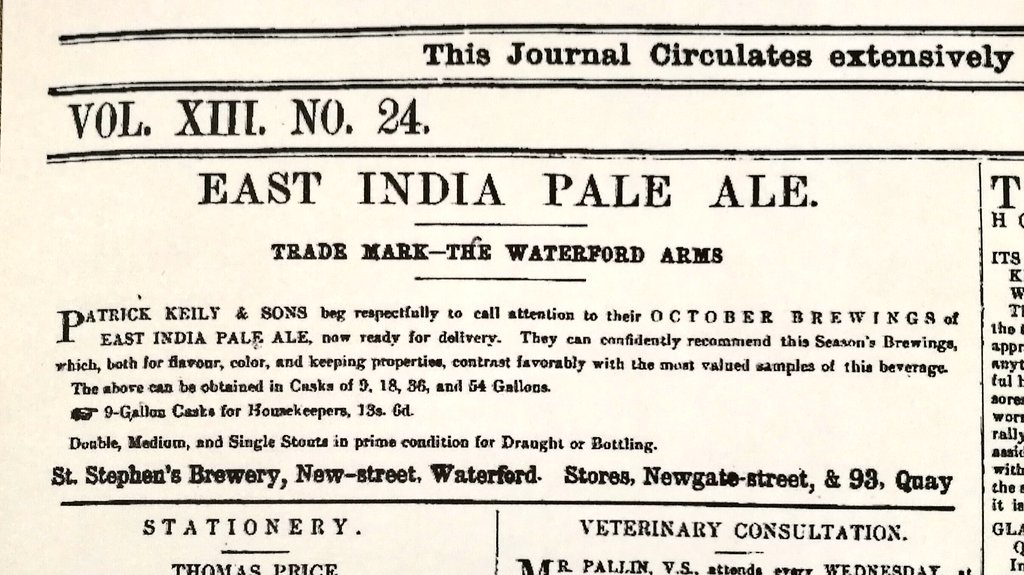
Beer History: Keily's Ale - St. Stephen's Brewery, Waterford

(Tweet-to-Blog-Conversion-Project)


Back in 2017 I posted a reply to an old photograph put up by Waterford History that showed a window of a pub in Waterford with a sign for Kiely's Pale Ale...


'Here's Keily's - 1865...'


(The Carlow Post - 1865)

My next Keily's post in that thread was this...

'...Here's another one from 1866...'


(The Carlow Post - 1866)
---
As you can see from these advertisements, St. Stephen's brewed a wide range of ales ... East India Pale Ale, Strong & Mild Ales, Double (XX), Medium & Single Stouts (I'm assuming that these were porters and not just stout (strong) ales, which wouldn't make sense to my mind if categorised in this way?)

I've mentioned the brewery previously in a post about an exhibition in Cork in 1883, where they were then exhibiting an XXX Ale as well as their India Pale Ale (Brewed with malt from Perry's in Rathdowney, Laois.) and an XXX Stout...

---

Last week I came across this nice write up about the brewery in the Munster Express from 1895, which originally came from the Irish Mineral Water Journal:


I'm unsure who the author of this passage was but they were seriously impressed by Keily's well hopped and flavoursome ale!

It's interesting to see how many of their comments echo similar points being made about our present beer revival, as to why we need to import so many foreign beers when we have such good ones here? I presume the answer is something to do with keeping breweries on their toes and giving a reference point as to how good is good? The same argument was, and is, given about food too, but surely without this foreign influx of different styles and products our own produce would be a lot less interesting and diverse, and our palates all the poorer too? (Having said all of that I do appreciate the sentiment of their tirade!)

And although I don't really know, I would think that when the time came for Keily's to finally stop brewing ,that foreign imports didn't play a huge part in that decision...


Part of my Tweet-to-Blog-Conversion-Project to give a slightly more permanent and expanded home to some of my previous Tweets.

(My original thread is here)

With thanks to my Local Library's Local Studies room.

Wednesday, 26 September 2018

Beer History: Pale Stouts ... from Cork and London

(Tweet-to-Blog-Conversion-Project)

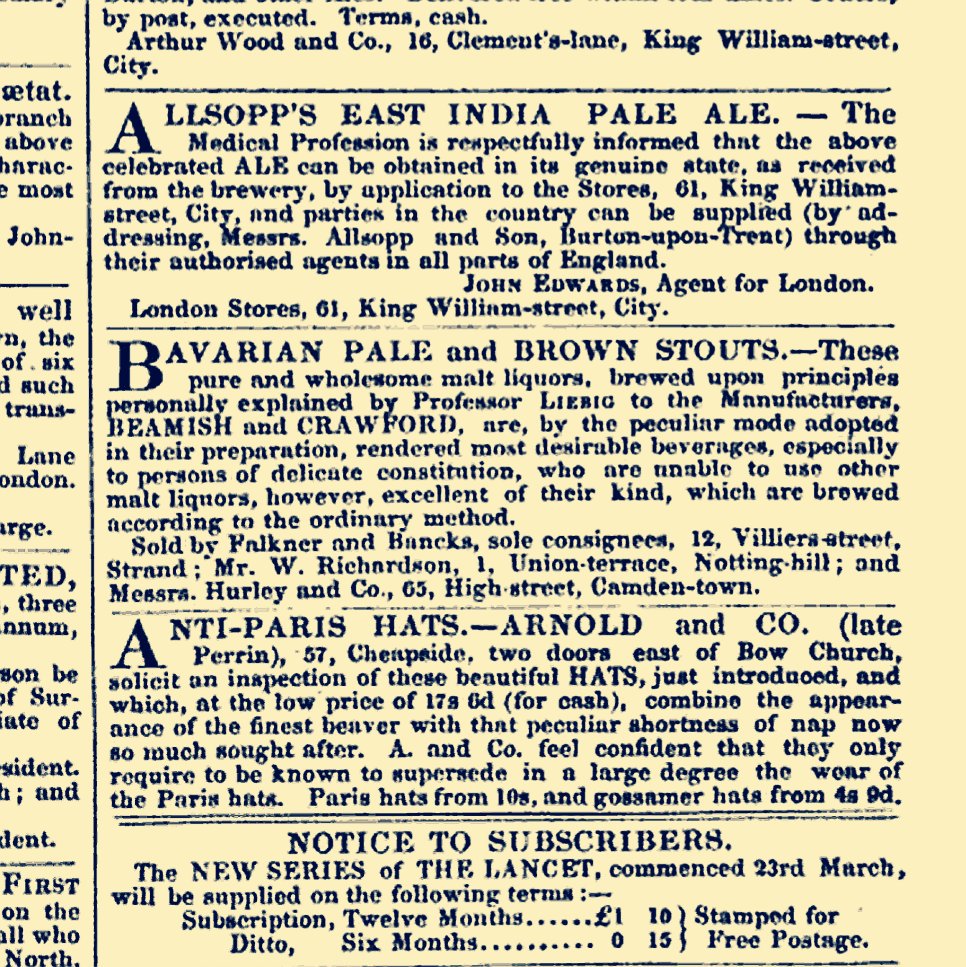
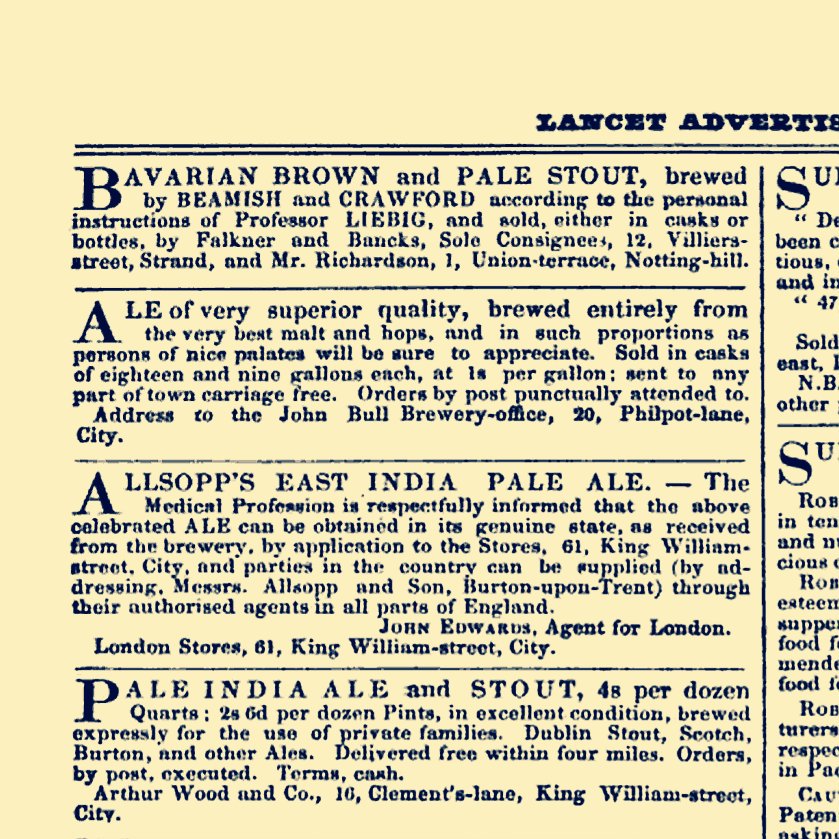
Hardly exciting or new but two nice mentions of Beamish & Crawford's Bavarian Pale and Brown Stouts from The Lancet in 1844, the only possible mystery is the Bavarian twist ... also of note is the mention of professor Liebig, previously mentioned here:


_____

I Tweeted that here back in January 2018 and since then I've come across a couple more mentions of this Bavarian Pale Stout from 1843. Keeping in mind that the word 'Stout' just meant heavy or robust when attached to a beer then and had not become attached solely to a type of strong porter...


I also came across an advertisement for Thrale's Brewery from 1771 - which I posted about here - that mentioned a 'London Pale Stout of a bright Amber Colour, superior to any Pale Beer or Ale imported...'


Note: Other, wiser minds than mine have talked about Pale Stouts in more detail, let Google be your friend...

(Part of my Tweet-to-Blog-Conversion-Project)

(With thanks to my Local Library's Local Studies room and Google Books)

Wednesday, 19 September 2018

Beer History: Mountjoy Brewery, Brown Ale and Nourishing Stout

(Tweet-to-Blog-Conversion-Project)

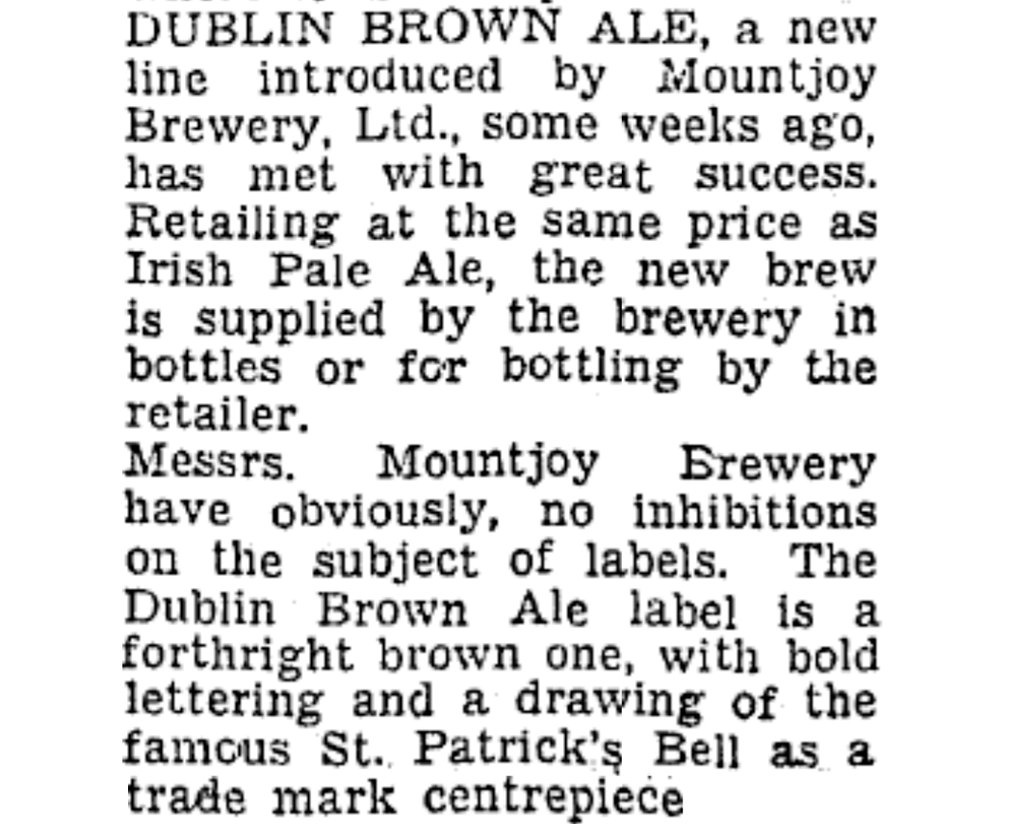
"Mountjoy Brewery brewed a 'Dublin Brown Ale' in 1953 it seems ... this is from the Irish Press of that year. I wonder if all their recipes are in someone's safe hands...?"


(This drew a question as to when they actually closed, some websites say 1949 but then I then found something online...)


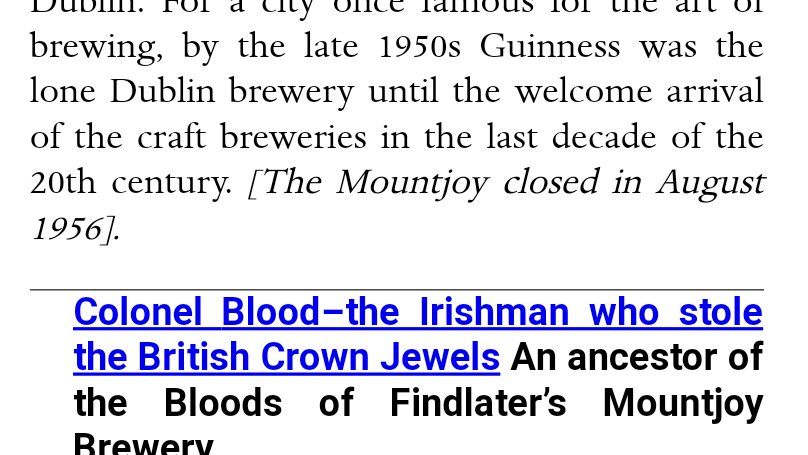
"... Interesting ... the online version of the Findlater book has an addendum that says it closed in 'August 1956'..."


(I then added this...)

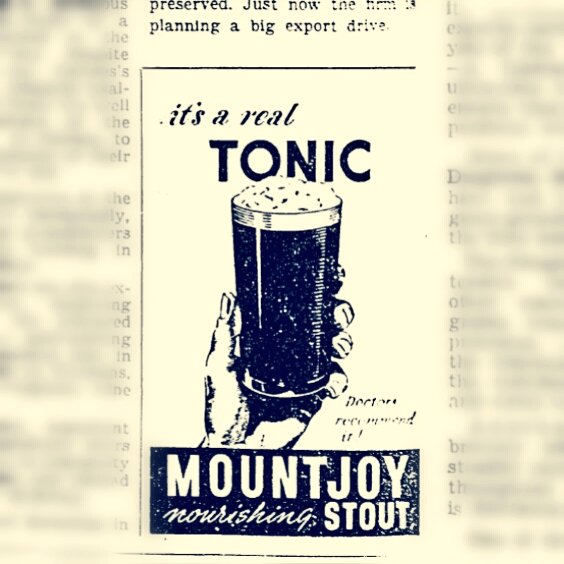
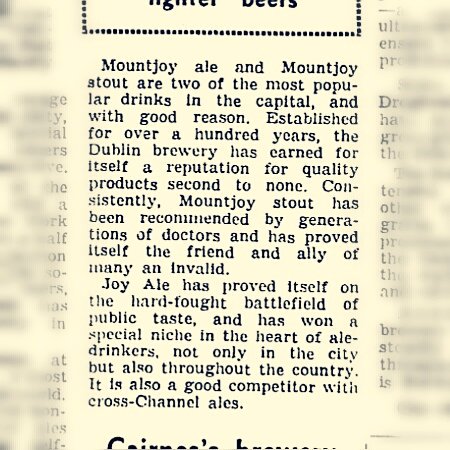
"... Further to the Mountjoy Brown Ale tweet above, here's a dubiously worded advert and a writeup from The Irish Press in 1955. It looks like that brown ale died a death - or isn't mentioned at least - and sadly the brewery was soon to head in the same direction..."


(Part of my Tweet-to-Blog-Conversion-Project - Original Tweet is here)

(With thanks to Carlow Library Local Studies room and Findlater's online book.)

Tuesday, 18 September 2018

Beer History: Cairnes' Irish Stingo Ale Adverts

(Tweet-to-Blog-Conversion-Project)


"Huh ... I never knew there was an Irish Stingo ale. I'd always associated it with England, but Cairnes brewed one in the 30s..."


(Here's another from the same publication, including a suggestion to mix Cairnes and Stingo!)


Images via:

Drogheda Museum's Blog

An Caman on the Limerick City Library Website

Update: Here's another Irish Stingo advert from the Saturday Herald 1932...


(Part of my Tweet-to-Blog-Conversion-Project - Original Tweet is here...)

Thursday, 9 August 2018

Beer History: Notes from The Cork Industrial Exhibition 1883 - Thin & Rough, Pungent ... and Over Burtonized Beer

In 1883 Cork city held its second industrial exhibition, having held its first in 1852 just one year after the Great Exhibition in the Crystal Palace in London. Amongst the usual arts, machinery and  other assorted produce was a selection of ales and porters from some of the breweries operating in Cork - and one in Waterford.


Here we have:

Beamish and Crawford showing their East India Pale Ale, Pale Bitter Ale, Extra Stout, Double Stout and Single Stout.

Lane & Co. had their Draught Porter in cask and West India Stout in cask and bottles.

Allman, Dowden & Co. with an ale and a stout.


Arnott & Co had an Extra Stout, a Stout and a Pale Ale in cask and bottle and a Mild Ale in cask.

Keily & Sons from Waterford - the only non-Cork brewers - had an India Pale Ale brewed with malt from Perry's in Rathdowney and an XXX Ale and XXX Stout made with their own malt.

All of this is interesting enough and once again shows that Irish breweries were attempting styles other than just porters, as I highlighted in my last post, but hardly too exciting...

But I've also come across both the awards handed out and also some interesting, if somewhat vague in some cases, tasting notes from a separate report published three years after the exhibition....


As can be seen, Arnott's, Beamish & Crawford's and Lane's breweries all won medals.

Beamish & Crawford's single stout has the 'characteristic thin rough flavour required of a quick consumption stout.' An interesting choice of words, as both thin and rough would often be used as negatives nowadays - not a profile of an award winning stout! Their bottled double stout was also described as clean but missing the 'pungency' required for a such a beer, again a word that is usually seen as negative

Lane & Co. won just a commendation but no medal for their export stout (presumably the West India Stout mentioned above), which seems to have been highly hopped and has 'kept well', but with some preservatives added ... perhaps? Their Stout, which wasn't listed above, is low hopped and the comments seem to give the impression that it could have been better ... that it 'should have been presented' fresher. The porter gets the best review, being a 'Good pleasant porter, full, sweet and clean.'

Although John Arnott's brewery also won two medals for its pale ale, there appears to have been some disagreement in the judges camp, as one of the jurors pointed out that both ales were so over 'Burtonized' to put them 'outside the category of genuine ales.' This was pointed out by William Sullivan, president of Queen's College in Cork, although Mr. C. O'Sullivan was a consulting chemist for Bass, in Burton-on-Trent. I'm not sure if names were mixed up or the analysis came to Cork's Mr. Sullivan via the Burton one, either way it seems that one Cork brewery may have been trying too hard to emulate Bass & Co.!

Anyhow, these are some of the earliest comments I have come across on the taste of Irish beers in any sort of judging setting, and they make interesting reading ... as does the rest of the report with comments on whiskey, cooperage, cider and other related issues that might lead some down a similar rabbithole to my own...

Liam

Thursday, 26 July 2018

Beer History : Lane & Co.'s Brewery, Cork - More Than Plain Porter...


So ... I'm not really sure what my fascination is with old Cork breweries, although I think the two excellent books on its most famous ones by Donol Ó Drisceoil and Diarmuid Ó Drisceoil have a lot to do with it, but it's also because I really like the city, its buildings, history and people. My biggest issue is that I don't get down there often enough...

I've previously tweeted these adverts from Lane & Co.'s brewery but felt they deserved a more permanent home on my blog to go along with my related posts about Lady's Well Brewery (Murphy's).

Lane's (along with Arnott's) was a competitor to Murphy's and Beamish & Crawford's breweries in Cork in the 1800s before it was sold to B & C in 1901, with Murphy's buying Arnotts the same year.

Both were closed...

---


This first advertisement is from The Cork Examiner in 1843 and states that their extra stout was popular in London at this time and which is echoed at a later date by Barnard in his comments in 'The Noted Breweries of Great Britain and Ireland'. They also brewed a Porter, East India Pale XX and an Amber Ale - more evidence perhaps of early, elusive red ales in the country perhaps!


The next advert is from the same paper in 1894 and is promoting its Mild and Bitter, plus an early version of a tapped growler!

One of the points of this post is to show again that there was a greater variety of beers brewed in the country than many would expect, and certainly more than I suspected when I started down this brewing history road. It's worth mentioning that the Ó Drisceoil's also mention West India Stout, Double Stout, Bottling Stout, Mixing Stout, Single Stout, X and an XB being brewed in Lane's.

Obviously porter or its variants were by far the most popular style consumed up until relatively recently, but there were plent of other beer styles brewed...

Liam

(With thanks to my local library and Donol Ó Drisceoil and Diarmuid Ó Drisceoil's 'Beamish & Crawford: The History of an Irish Brewery'.)